



Experience Care Before You Commit with Universal Nursing Care’s 5-Day Trial Package
May 22, 2026
In-House Medical Services – On-Call Doctor at Your Doorstep
October 3, 2026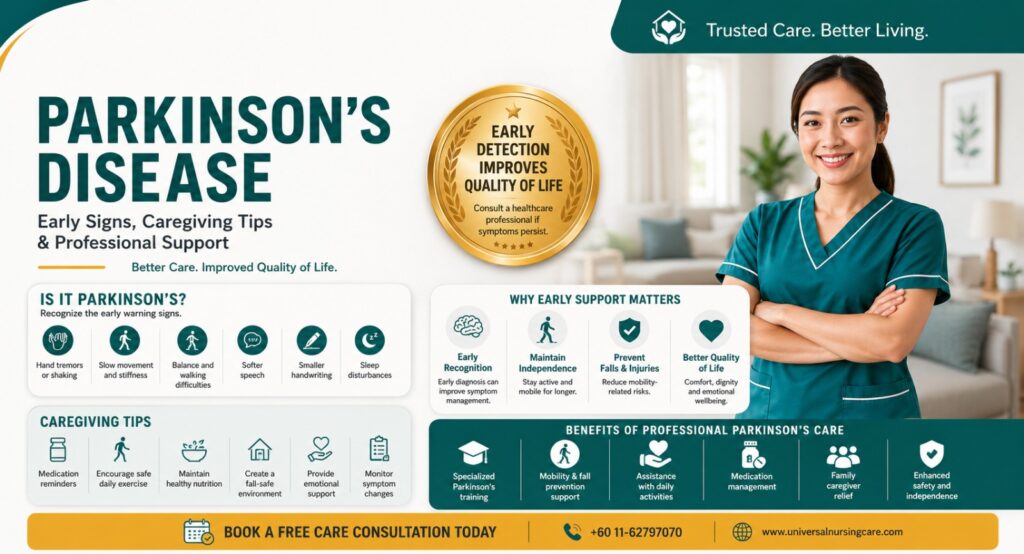
Parkinson’s disease is a progressive neurological disorder that affects movement, balance, and coordination. While it is more common in older adults, Parkinson’s can affect people at different ages and often develops gradually. Early recognition and proper care can significantly improve a patient’s quality of life and help them maintain independence for as long as possible.
Understanding Parkinson’s Disease
Parkinson’s disease occurs when nerve cells in the brain that produce dopamine begin to deteriorate. Dopamine is a chemical that helps control movement and coordination. As dopamine levels decrease, symptoms of Parkinson’s become more noticeable and can impact daily activities.
Although there is currently no cure for Parkinson’s disease, early diagnosis, appropriate medical treatment, and quality caregiving can help manage symptoms effectively.
How to Identify Parkinson’s Disease in Its Early Stages
Recognizing the early signs of Parkinson’s disease is crucial for timely medical intervention. Some of the most common early symptoms include:
- Tremors
A slight shaking or tremor in the hands, fingers, chin, or legs is often one of the earliest signs. Tremors usually occur when the body is at rest.
- Slowed Movement (Bradykinesia)
Patients may notice that routine tasks take longer to complete. Walking, dressing, and other daily activities may become increasingly difficult.
- Muscle Stiffness
Stiffness in the arms, legs, neck, or torso can cause discomfort and reduce flexibility.
- Changes in Walking and Balance
People with Parkinson’s may begin to shuffle their feet, take smaller steps, or experience balance issues that increase the risk of falls.
- Changes in Handwriting
A person’s handwriting may become noticeably smaller and more cramped, a symptom known as micrographia.
- Reduced Facial Expressions
Some individuals develop a “masked face,” where facial expressions become less noticeable due to reduced muscle movement.
- Softer Voice
Speech may become quieter, monotone, or difficult for others to hear.
- Sleep and Mood Changes
Sleep disturbances, anxiety, depression, and fatigue can sometimes appear before movement-related symptoms become obvious.
If these symptoms persist, it is important to consult a healthcare professional for proper evaluation and diagnosis.
How to Care for a Person with Parkinson’s Disease
Caring for someone with Parkinson’s requires patience, understanding, and specialized knowledge. As the condition progresses, patients may need increasing assistance with daily activities.
Encourage Regular Medication Management
Parkinson’s medications must often be taken at specific times to manage symptoms effectively. Missing doses can lead to worsening symptoms and discomfort.
Promote Safe Mobility
Keeping walkways clear, installing handrails, and using mobility aids when necessary can help reduce the risk of falls.
Support Physical Activity
Regular exercise can help improve balance, flexibility, strength, and overall well-being. Activities such as walking, stretching, and physiotherapy are often beneficial.
Maintain Proper Nutrition
A balanced diet supports overall health and energy levels. Adequate hydration and fiber intake can also help manage common digestive issues such as constipation.
Provide Emotional Support
Living with Parkinson’s can be emotionally challenging. Compassion, encouragement, and social interaction play an important role in maintaining mental health.
Monitor Changes in Symptoms
Caregivers should observe and report any changes in mobility, speech, cognition, mood, or daily functioning to healthcare providers.
Why Families Should Consider Professional Parkinson’s Care
While family members often provide loving support, Parkinson’s care can become physically and emotionally demanding over time. Professional caregivers offer expertise and assistance that can greatly improve both patient outcomes and family well-being.
Specialized Knowledge and Training
Professional caregivers understand the unique challenges associated with Parkinson’s disease, including mobility issues, medication schedules, fall prevention, and symptom management.
Enhanced Safety
Trained caregivers can identify potential hazards, assist with transfers and mobility, and help prevent accidents and injuries.
Consistent Care and Monitoring
Professionals can closely monitor the patient’s condition and recognize early signs of complications, allowing timely medical intervention.
Support with Daily Activities
As Parkinson’s progresses, patients may need help with bathing, dressing, grooming, meal preparation, and other daily tasks. Professional caregivers provide dignified assistance while promoting independence whenever possible.
Reduced Stress for Family Members
Caring for a loved one with Parkinson’s can be overwhelming. Professional support allows family members to focus on spending quality time with their loved one rather than managing every aspect of care.
Improved Quality of Life
With proper support, Parkinson’s patients can remain comfortable, safe, and engaged in their daily lives. Professional caregivers help create a structured and supportive environment that enhances overall well-being.
How Universal Nursing Care Can Help
At Universal Nursing Care, we understand the challenges families face when caring for a loved one with Parkinson’s disease. Our trained caregivers provide compassionate, personalized care tailored to each individual’s needs. From assistance with daily activities and medication reminders to mobility support and companionship, we are committed to helping patients maintain dignity, comfort, and the highest possible quality of life.
Conclusion
Parkinson’s disease can present many challenges, but early detection and proper care can make a significant difference. Understanding the warning signs, creating a safe environment, and seeking professional caregiving support can help patients live more comfortably and independently. For families navigating the complexities of Parkinson’s care, partnering with experienced professionals provides peace of mind and ensures that loved ones receive the attention and support they deserve.